Plans
| Plan | Who it's for | Devices | Songs per device | Pitch control | Price |
|---|---|---|---|---|---|
| Free | Karaoke at home | 5 | 1 | — | Free |
| Pro | A bigger party | 15 | 10 | — | €1.99 for 24 hours |
| Business | Bars and venues | Unlimited | Configurable | Yes | [€ / month] |
A Pro pass can be handed over to another account in the same room, so the night keeps going if the person who started it leaves early. Next idea under evaluation: packs of 10 Pro passes for €15 instead of €20.
Design decisions
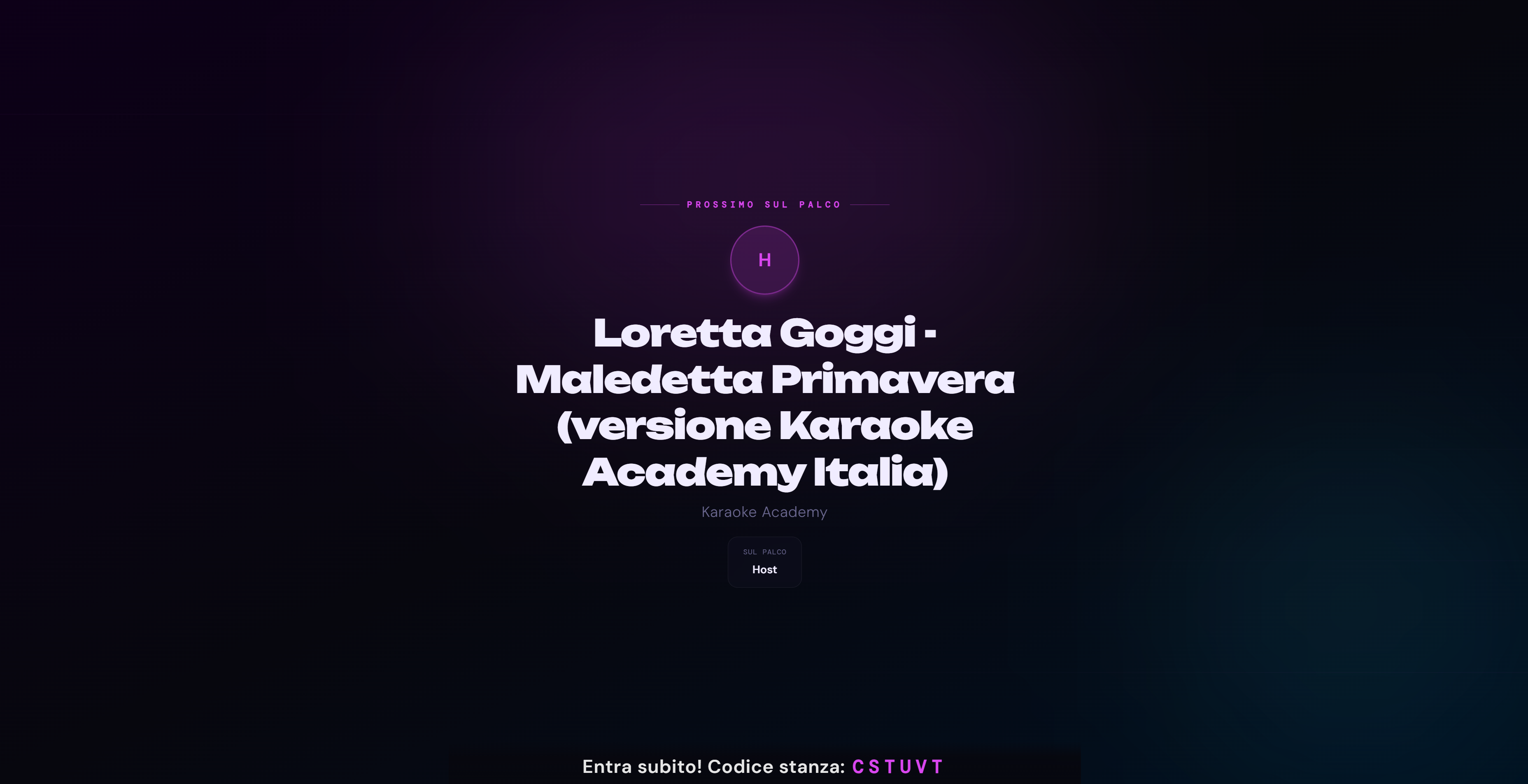
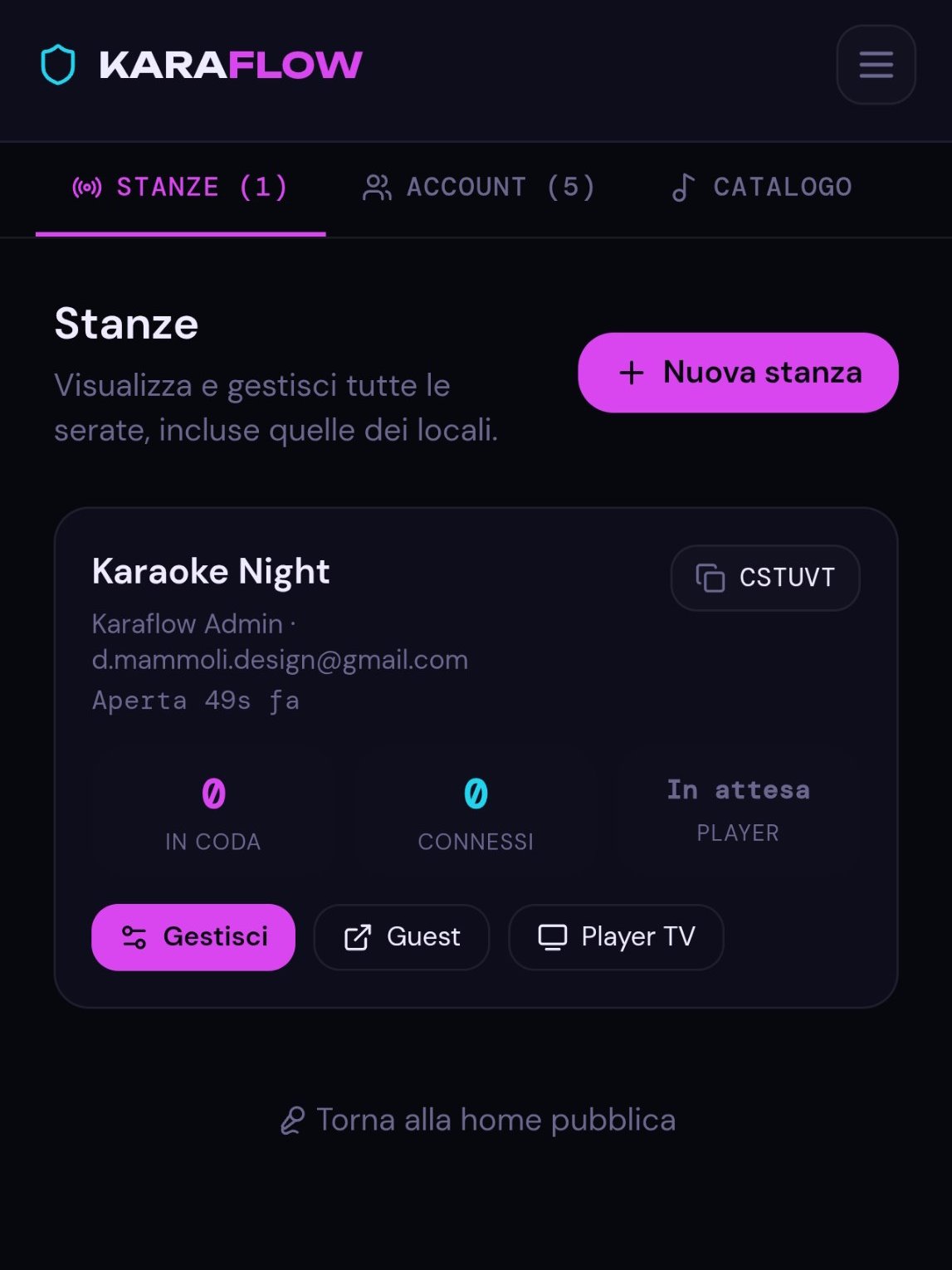
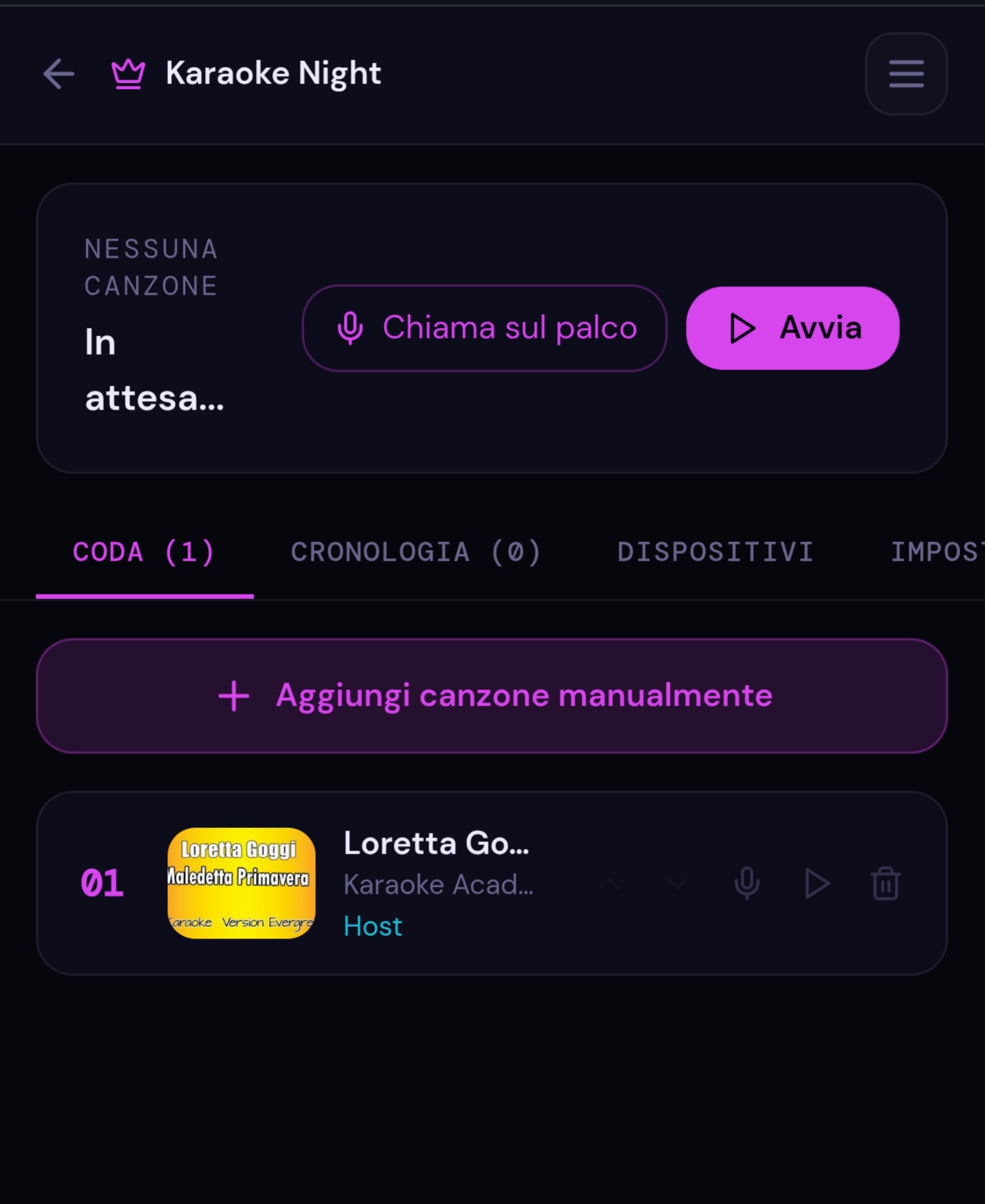
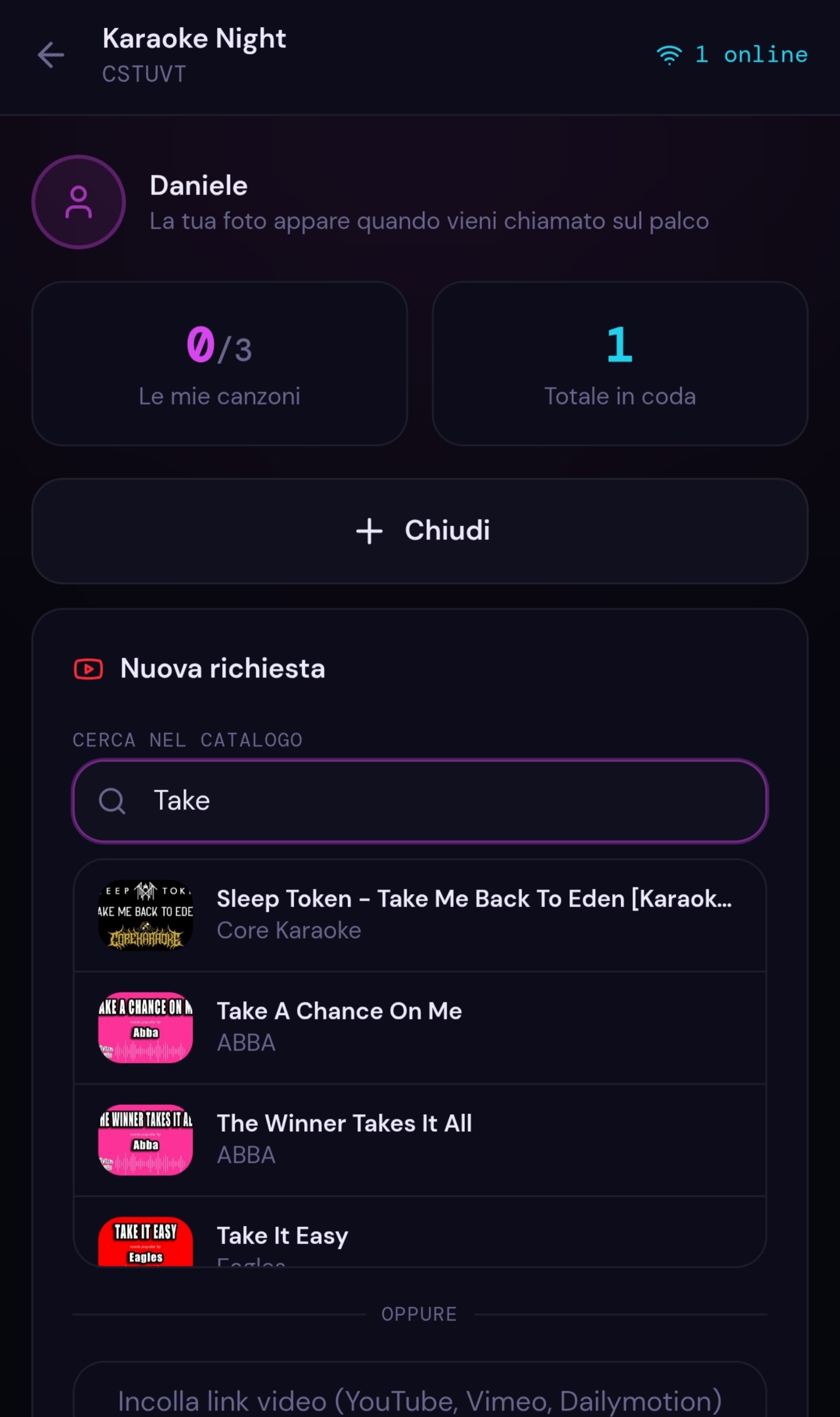
- One surface per role. Host, guests and TV each get only what they need, so nobody has to share a device.
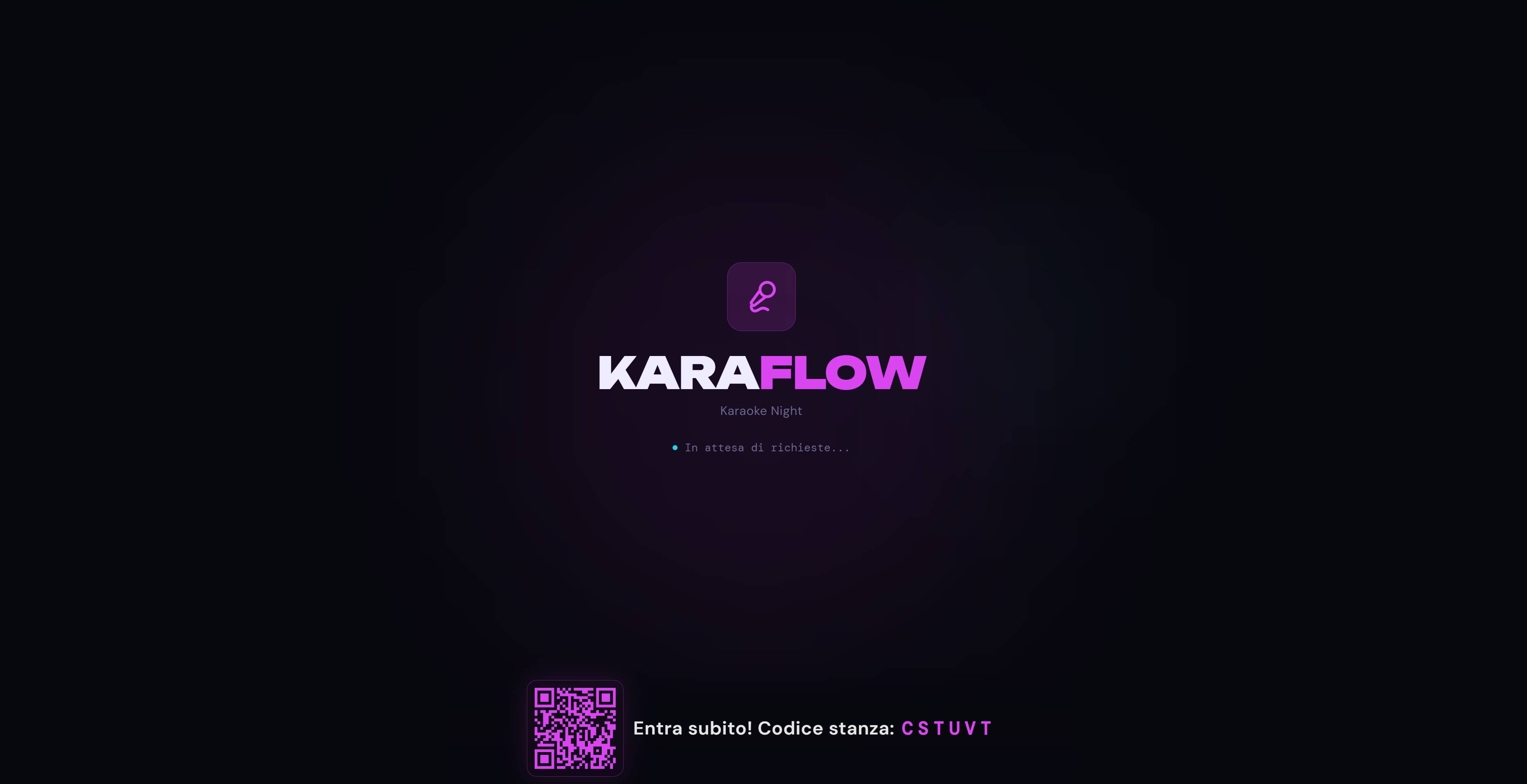
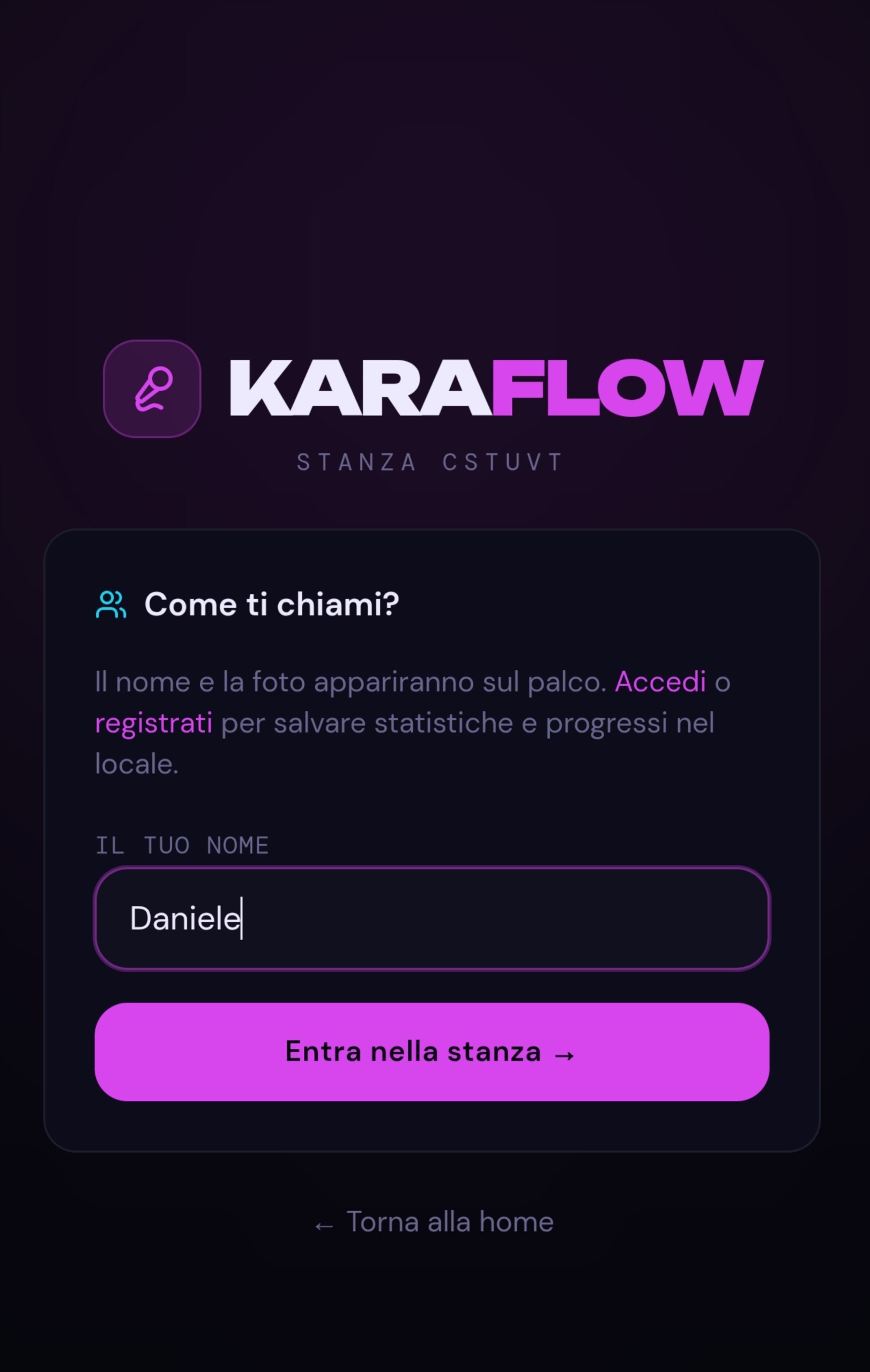
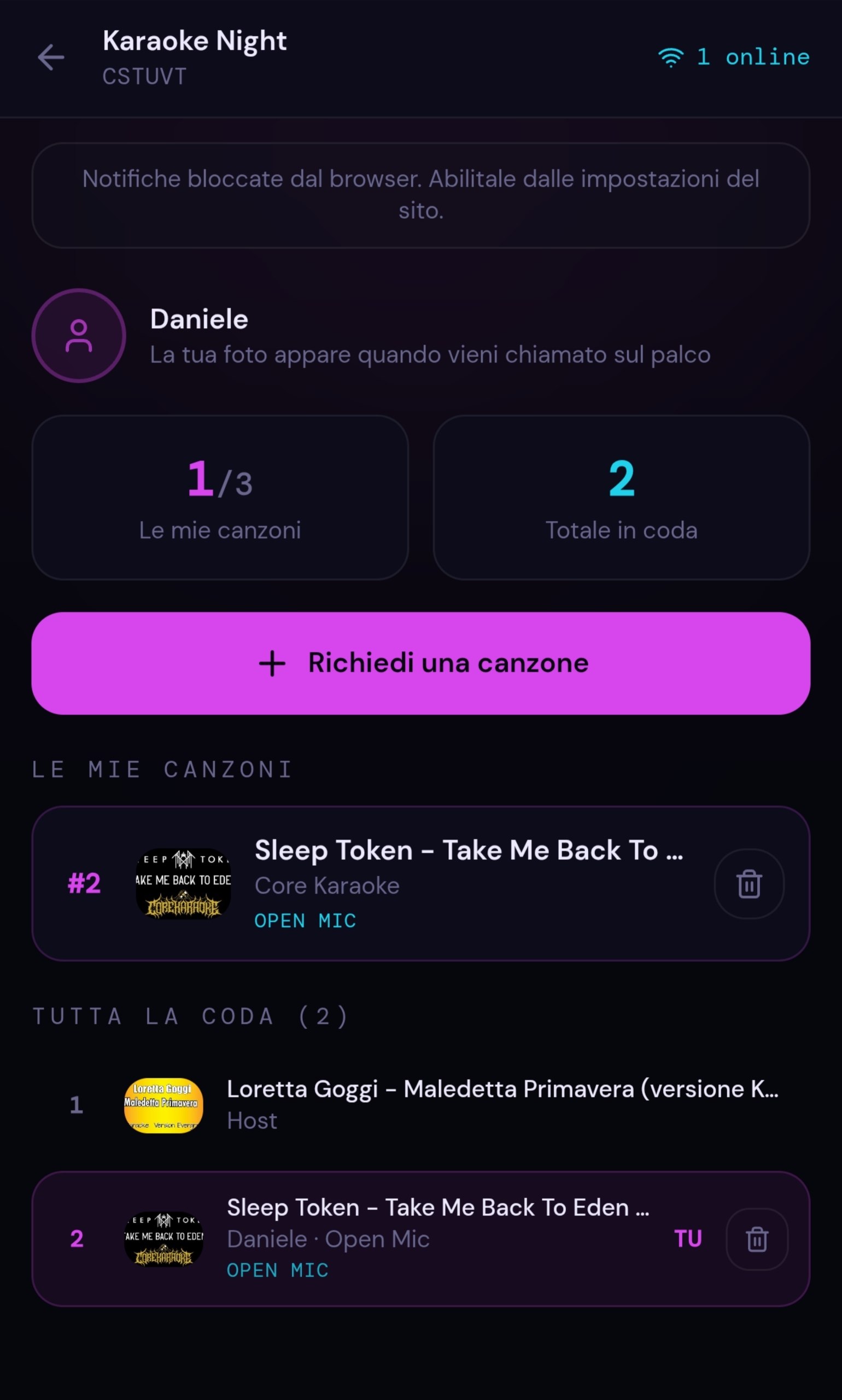
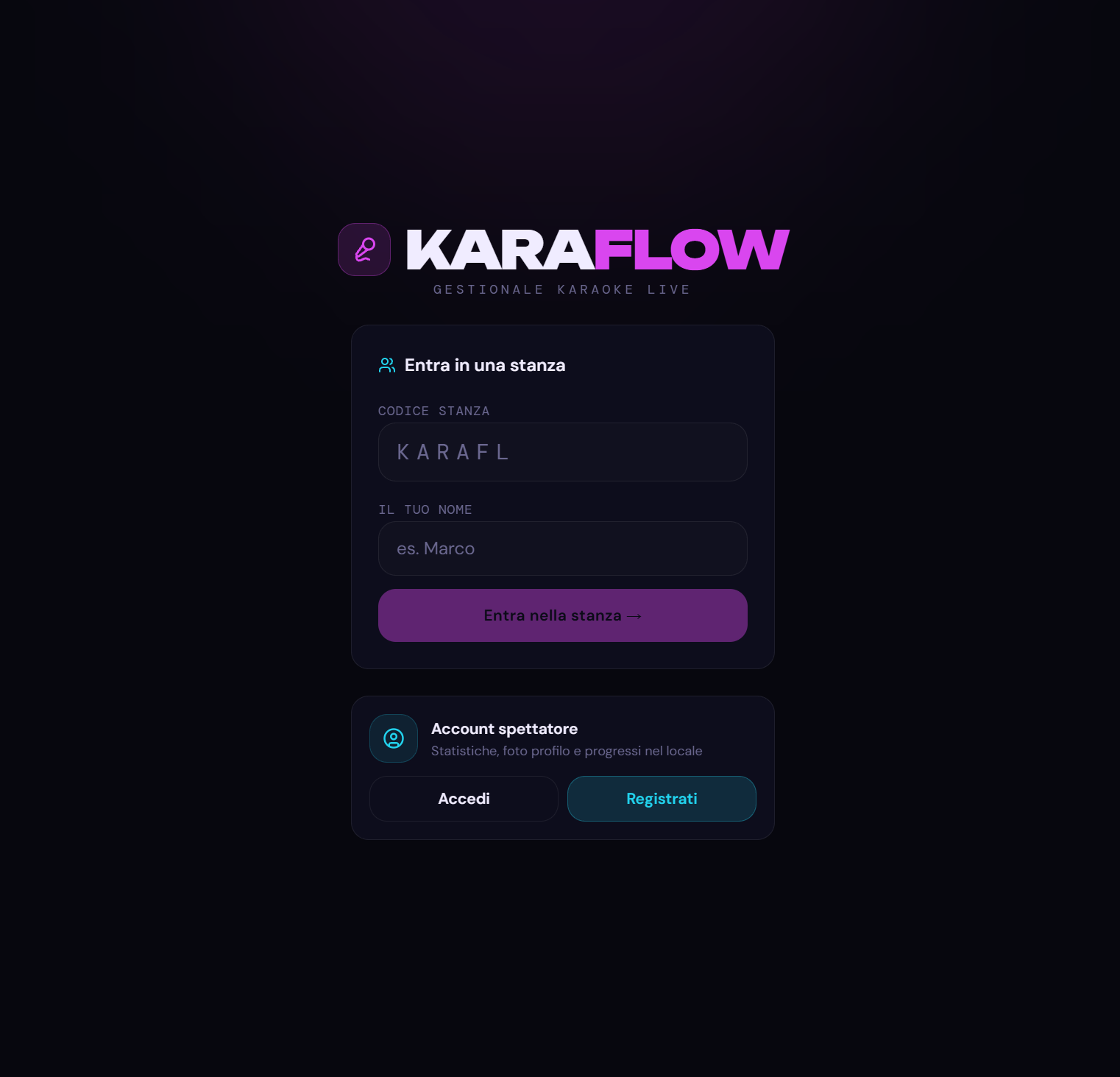
- Join in seconds. A QR code and a name are enough; asking guests to sign up at a party would kill participation.
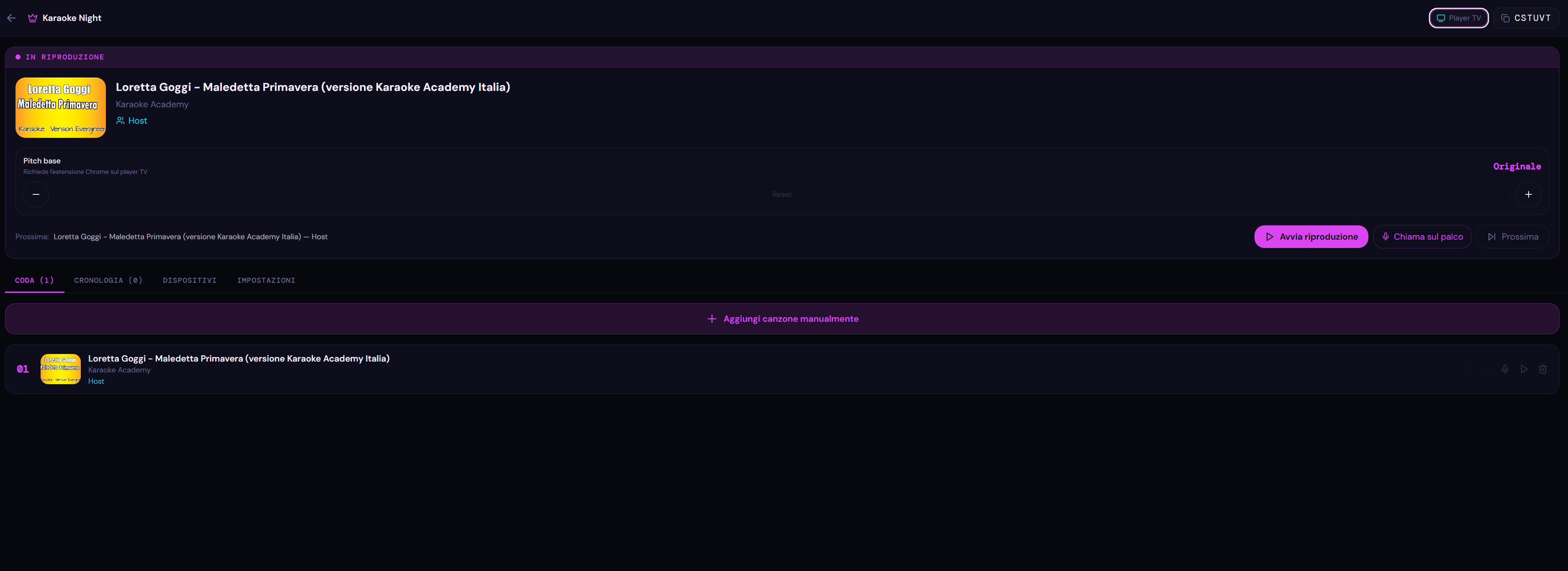
- From venues to living rooms. Home rooms need no dashboard: create, open the TV, queue from the phone and autoplay does the rest.
- Pricing that follows real use. Venues sing every week and pay monthly; friends sing once in a while and pay only for the night they need.
- Trust the server, not the client. Limits, bans and room permissions run in the database, so the rules hold even if someone tampers with the page.
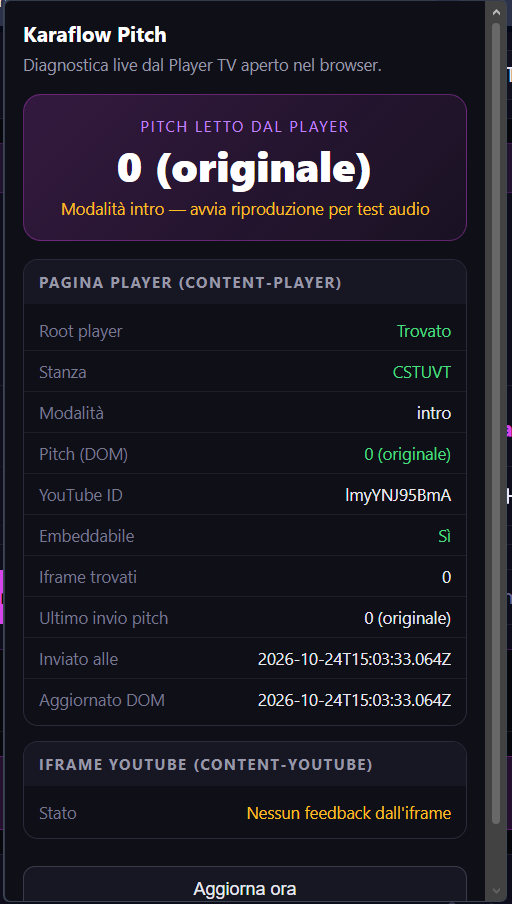
- Work around the platform, not against it. When the video players couldn’t change pitch, a small browser extension added the feature without leaving the embeds people already know.
- Graceful degradation. Every provider plays; YouTube gets the full feature set, and the others get the essentials instead of nothing.
- Small, reviewable steps. The product grew through 30+ database migrations and pull requests opened by Cursor's background agents, each with deploy notes and a test checklist, which I reviewed and shipped.